Popular Documentary TV Shows - Page 5

Remembers…
2022
Remembers…
2022
What are the secrets of our favourite TV shows? Famous names from both sides of the camera reflect on making some of the most popular and influential programmes of all time.World War II with Tom Hanks
2026
star 7.7Explores WWII from Germany's invasion of Poland through the atomic age, examining pivotal battles, wartime leaders like Churchill and Roosevelt, and the human cost of total war.Ulisse - The Pleasure of Discovery
2001
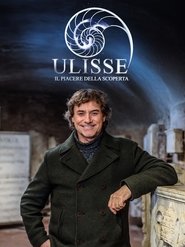
star 9Alberto Angela leads the dissemination program dedicated to history, art and culture. A historical, archaeological, informative story, with the presence of some protagonists of the Italian cultural or artistic scene.Twice in a Lifetime
1999
Twice in a Lifetime
1999
star 6.2Prematurely deceased people are given the opportunity to correct something that went wrong in their lives and thus change them for the better.Galileo
1998
Galileo
1998
star 4.8This daily German magazine show delivers interesting facts on numerous topics centering around technology, life, and bizarre knowledge.The Movies That Made Us
2019
star 7.3These blockbusters brought us together and gave us the time of our lives. Meet the actors, directors and industry insiders who made them happen.30 for 30
2009
30 for 30
2009
star 7.530 for 30 is the title for a series of documentary films airing on ESPN, its sister networks, and online highlighting interesting people and events in sports history. This currently includes four "volumes" of 30 episodes each, a 13-episode series under the ESPN Films Presents title in 2011–2012, and a series of 30 for 30 Shorts shown through the ESPN.com website. The series has also expanded to include Soccer Stories, which aired in advance of the 2014 FIFA World Cup, and audio podcasts. This entry refers to the main Volumes of the series presented by ESPNKulturplatz
2004
Doctor Who Confidential
2005
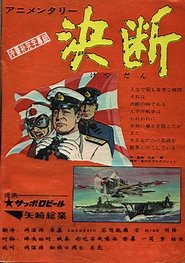
star 8.1Doctor Who Confidential is a documentary to complement the revival of the long-running British science fiction television series Doctor Who. Each episode was broadcast on BBC Three on Saturdays, immediately after the broadcast of the weekly television episode on BBC One. The running time of the first two series was 30 minutes, being extended to 45 minutes in the third. BBC Three also broadcast a cut-down edition of the programme, lasting 15 minutes, shown after the repeats on Sundays and Fridays and after the weekday evening repeats of earlier seasons.Decision
1971
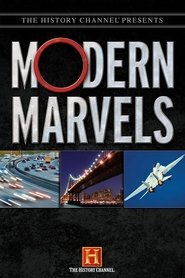
Modern Marvels
1993
Modern Marvels
1993
star 8.1HISTORY’s longest-running series moves to H2. Modern Marvels celebrates the ingenuity, invention and imagination found in the world around us. From commonplace items like ink and coffee to architectural masterpieces and engineering disasters, the hit series goes beyond the basics to provide insight and history into things we wonder about and that impact our lives. This series tells fascinating stories of the doers, the dreamers and sometime-schemers that create everyday items, technological breakthroughs and manmade wonders. The hit series goes deep to explore the leading edge of human inspiration and ambition.Lecture Room
2001
Lecture Room
2001
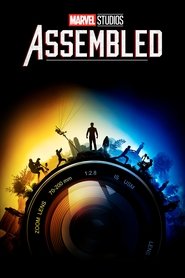
Marvel Studios Assembled
2021
star 7.2Go behind the scenes of the shows and movies of the Marvel Cinematic Universe, following the filmmakers, cast and crew, and Marvel heroes every step of the way.Tomorrow's World
1965
Tomorrow's World
1965
star 6.4Tomorrow's World was a long-running BBC television series on new developments in science and technology. First transmitted on 7 July 1965 on BBC1, it ran for 38 years until it was cancelled at the beginning of 2003.The Nature of Things
1960
The Nature of Things
1960
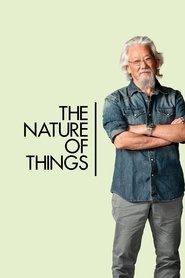
star 7.2The Nature of Things is a Canadian television series of documentary programs. It debuted on CBC Television on November 6, 1960. Many of the programs document nature and the effect that humans have on it. The program was one of the first to explore environmental issues, such as clear-cut logging. The series is named after an epic poem by Roman philosopher Lucretius: "Dē Rērum Nātūrā" — On the Nature of Things.Haixia Ni: Complete Collection of Human Canon & Celestial Canon
2006
Here’s the concise version under 800 characters: This collection features classic lectures by TCM master Haixia Ni (1954–2012), former Dean of Han-Tang College of TCM (USA). It includes two core series: Human Canon and Celestial Canon. Human Canon breaks down the five major TCM classics, building a complete clinical and theoretical system from basics to complex cases. Celestial Canon integrates the I Ching, numerology, and feng shui, explaining TCM philosophy and life laws. Ni’s plain, humorous style makes obscure classics accessible to all. A must-watch for TCM enthusiasts and practitioners.The Joy of Painting
1983
The Joy of Painting
1983
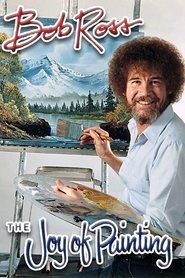
star 8.5The Joy of Painting was an American television show hosted by painter Bob Ross that taught its viewers techniques for landscape oil painting. Although Ross could complete a painting in half an hour, the intent of the show was not to teach viewers "speed painting". Rather, he intended for viewers to learn certain techniques within the time that the show was allotted. The show began on January 11, 1983, and lasted until May 17, 1994, a year before Ross' death.Cinépanorama
1956
Chiisana Tabi
1983
Eisenbahn-Romantik
1991
Eisenbahn-Romantik
1991
star 8.8Railway-related documentary covering modern railway systems, museum railways and their facilities as well as items on model railway layouts. Politics and criticism is not left out; the series reports on closures, controversial model ideas, delays to reconstruction plans or smart commuter transport concepts.